Narendra Kusnur's music musings …


aash2

Aashiqui 2/ Music: Jeet Gangulli, Mithoon, Ankit Tiwari

Genre: Hindi film music

T-Series/ Rs 175

Rating: ****

BACK in 1990, the songs of Mahesh Bhatt’s Aashiqui had become a rage, catapulting music directors Nadeem-Shravan and singer Kumar Sanu to stardom, and giving Anuradha Paudwal some of her biggest hits. Even today, songs like ‘Main duniya bhula doonga’, ‘Ek sanam chahiye’, ‘Dheere dheere se’, ‘Nazar ke saamne’, ‘Dil ka aalam’, ‘Jaane jigar jaaneman’, ‘Ab tere bin’ and ‘Tu meri zindagi’ are hummed by many.

Naturally, for those who’ve grown up on those classics, the first reaction to the music of Mohit Suri’s Aashiqui 2 would be to compare the two. But then, such a comparison would be unfair and pointless as there is a huge 23-year gap between these two films. If one listens to the new album with that mind-block, one may never appreciate it in its truest sense.

Remove that bias, and you slowly discover that Aashiqui 2 is one of the best music albums to come out over the past three or four years. At a time when composers are experimenting with sounds, going in for dance numbers. Punjabi and Sufi flavours or alternative approaches, Aashiqui 2 works because it is simple, clean and lyrically-appealing. And what’s really commendable is that though it features three music directors (Jeet Gangulli, Mithoon and Ankit Tiwari) and four lyricists (Irshad Kamil, Mithoon, Sandeep Nath and Sanjay Masoomm), there’s a certain consistency and coherence in the sound and songwriting.

A clear highlight of the 11-track CD is the quality of the arrangements. The acoustic guitar, electric guitar, keyboards, bansuri and santoor have been used charmingly, and the production and recording are of the highest standard. And even if one senses a bit of monotony in some of the later tracks, it is offset by the smart instrumentation.

The set begins with ‘Tum hi ho’, composed and written by Mithoon. It begins with a pleasant keyboard stretch after which Arijit Singh renders the lines “Hum tere bin reh nahin sakte, tere bina kya wajood mera.” Sung with depth and feel, it impresses on the lines, “Tera mera rishta hai kaisa, ik pal door gawaraa nahin, tere liye har roz hai jeete, tujh ko diya mera waqt sabhi.”

Mithoon contributes to two other numbers. ‘Meri Aashiqui’, written by Irshad Kamil and sung by Palak Muchhal and Arijit, continues from ‘Tum hi ho’, retaining the lines ‘Kyunki tum hi ho, ab tum hi ho, zindagi ab tum hi ho; chain bhi, mera dard bhi, meri aashiqui tum hi ho’. Then, there is ‘Aashiqui —The Love Theme’, a soothing piano-based instrumental using the same tune as ‘Meri aashiqui’.

One of the film’s clear highlights is ‘Sunn raha hai’. Composed and sung by Ankit Tiwari, and written by Sandeep Nath, it uses a rock power ballad style, with a repeated guitar line in the beginning, a sudden burst of electric guitar, charming use of the zitar (a cross between the sitar and guitar) and a pumped-up crowd-clapping backdrop at the end. The lines ‘Sun raha hai tu, ro raha hoon mein’ are the kind that’ll make you sing along.

The female version of this song, sung by Shreya Ghoshal, changes the orchestration completely, using acoustic guitar, bansuri, santoor and the claypot percussion instrument ghatam, reminding you of the Shiv-Hari style.

The other numbers are composed by Jeet Gangulli, who once worked as part of a duo with Pritam before concentrating on Bengali films. ‘Chahun mein ya naa’, written by Irshad Kamil and sung by Palak Muchhal and Arijit Singh, is a pleasant love song, with some striking orchestrations, a melodic electric guitar passage and wonderful lines like “Mere chhote chhote khwaab hain, khwaabon mein geet hain, geeton mein zindagi hai, chaahat hai, preet hai.”

‘Hum mar jaayenge’, sung by the sweet-voiced Tulsi Kumar and Arijit, boasts of some incredible flute portions, set mostly to acoustic guitar and keyboard backdrop. ‘Piya aaye na’ (Tulsi Kumar and KK) is one of the peppier tunes, using vocal overdubs and back-up singers.

‘Bhula dena’, sung by Mustafa Zahid, is melancholic and pathos-filled, and has an outstanding lead guitar passage in the middle. Both the keyboard-driven ‘Aasan nahin yahan’ and guitar-backed ‘Milne hai mujhse aayi’ begin with brilliant lines by Irshad Kamil, and both have been sung powerfully by Arijit. While the former starts with “Aasaan nahin yahaan aashiq ho jaana, palkon pe kaanton ko sajaana; aashiq ko milta hai gham ki saugaatein, sabko na milta yeh khazana,” the latter begins, “Milne hai mujhse aayi, phir jaane kyon tanhai, kis mod pe laayi aashiqui.”

To be sure, a couple of songs take time to grow on you. But the more you listen to them, the more refreshing they sound. Only time can tell whether they will match the popularity of the original Aashiqui, with today’s audiences being more impatient and exposed to wider choice. But on its own, the Aashiqui 2 music stands out. It’s the kind of CD you’ll want to play on loop, discovering something new each time. That happens rarely these days.

RATING SCALE: * Poor; ** Average; *** Good; **** Excellent; ***** Simply outstanding


IN September 2012, I had begun a monthly series on Indian musical instruments. The aim was two-fold: one, to make Indian readers aware of certain artistes they might not have heard before, and secondly, to expose relatively new audiences, mainly from the West, to the melodic or rhythmic beauty that various Indian instruments offer.

In this series, I shall not go into too many technicalities and playing styles. I shall focus on how the instrument is used in different genres, and mention the leading performers in each style. However, while I have tried to name all the main musicians, the lists mentioned are by no means exhaustive or complete. In all parts of the series, I shall use a similar format to maintain uniformity, and some portions on the concert structure may be repeated verbatim if needed.

The earlier parts of the series talked about the violin, sitar, bansuri, sarangi, different types of veena, the sarod and santoor. This month, we feature the shehnai and nadaswaram.

bismillah

WHEN one talks of the shehnai, only one name comes to mind. For over six decades till he passed away on August 21, 2006, Ustad Bismillah Khan was single-handedly identified with this wind instrument, making it popular in Hindustani classical music and elevating it to concert stage status.

Khan was a recipient of the Bharat Ratna, India’s highest civilian honour, and his records were, and still are, compulsorily played on many auspicious occasions like marriages and religious ceremonies.

While the shehnai is immensely popular in north India, a similar instrument — nadaswaram — is played in the south, again mainly on auspicious occasions and in temples. Both belong to the family of double reed instruments, and are made of wood, with a metal bell at one end. However, the nadaswaram is much longer, and even louder. In fact, it is considered to be the world’s loudest non-brass acoustic instrument.

Here, we shall discuss both instruments separately, mention the main musicians playing them, and talk about how some western musicians have also played them. But before that, we shall try and figure out what reed instruments are.

Reed instruments: They use reeds, which are thin strips which vibrate to produce sound, and can be classified into single reed, double reed or free reed.

In a single reed, one piece of cane vibrates against the mouthpiece, whereas in a double reed, two pieces vibrate against each other. In a free reed, which need not necessarily be found in wind instruments, sound is produced when air passes a vibrating reed in a frame.

Single reeds are mostly used in saxophones and clarinets, whereas double reeds are found in the oboe, bassoon, English horn, the European shawm, the Arabic mizmar and many ethnic instruments, besides the shehnai and nadaswaram. Free reeds are used in various global folk instruments, and also in the harmonica, accordion and harmonium.

Shehnai: Like the santoor, discussed in the previous part of the series, the shehnai has relatively fewer practitioners compared to the sitar, sarod and bansuri (bamboo flute). Yet, it remains hugely popular among Indian classical music fans, mainly because of the serene and spiritual music it produces.

The shehnai is played largely in north and west India, but one hears it even in Pakistan and Iran. There are various theories about its origin. One is that is a derivative of a Persian instrument called surnai. Another is that it was played by a barber (Hindi word: nai) in the court of a Shah (king), and hence the word shehnai. A third is that it was named after a musician called Shehinia. A fourth is that it is a combination of the words ‘sheh’ (meaning breath) and ‘nai’ (reed or flute). And there are some who believe it combines the words ‘Shah’ and ‘nai’ (flute), and is thus a ‘king’s flute’.

The shehnai has between six and nine holes, and requires immense breath control. It has a range of two octaves.

How shehnai is played: In any concert, the musician sits cross legged. He could either play it alone with tabla accompaniment, or as was often done by Bismillah Khan, assisted by three or four other shehnai players.

At times, the instrument is also used as a duet (called jugalbandi) with other instruments. While the jugalbandis between Bismillah Khan and sitar legend Ustad Vilayat Khan are simply outstanding, the maestro has also played with violinists VG Jog, N Rajam and L Subramaniam, the last being in north-south encounters.

A concert usually begins with the rendition of a classical raga, the melodic mode used in Indian music. After that, shehnai players usually play many light, folk pieces or devotional pieces like the thumri, kajri, chaiti, hori or bhajan.

Main players: Though Bismillah Khan became synonymous with the shehnai, those who have followed Hindustani classical music closely would have also heard Pandit S Ballesh, Anant Lal, Ram Lal, Raghunath Prasanna, Ali Hussain Khan, Krishna Ram Chaudhury, Lokesh Anand and Ali Ahmed Hussain.

For his part, Bismillah Khan symbolised the instrument. Among his numerous achievements, he played at the Red Fort, Delhi, on the eve of India’s Independence in 1947 and also at the ceremony held a day before the country became a republic in 1950. For years, India’s national television channel Doordarshan telecast his live performances after the prime minister’s speech on August 15, India’s Independence Day.

Bismillah Khan rarely accepted disciples, but because of his close association with Sikh spiritual leader Satguru Jagjit Singh JI, taught a few musicians who played the stringed instrument tarshehnai at their religious functions, and guided them on how to play the wind instrument. His other disciples included Sailesh Bhagwat and Bageshri Qamar, who is also one of the few females to play the instrument. The maestro has also guided thumri singer Soma Ghosh, his adopted daughter.

Nadaswaram: Like the shehnai is in north India, the nadaswaram is considered very auspicious in south India. It is played in many Hindu weddings and even in temples, accompanied by the percussion instrument thavil, and sometimes by a wind instrument called ottu, which provides the backdrop drone.

The nadaswaram has seven finger-holes, and five holes at the bottom which can be blocked to modify the tone. It has a range of two and a half octaves, similar to the bansuri. However, because of its high volume, the nadaswaram is said to be more suited for outdoor concerts.

Main players: The well-known nadaswaram practitioners include Thiruvavadudurai Rajaratnam Pillai, Thiruvengadu Subramania Pillai and Thiruvidaimaruthur P S Veerusami Pillai, besides the Keeranur, Thiruveezhimizhalai, and Semponnarkoil brothers.

Use of shehnai and nadaswaram in other music: Both instruments have been used regularly in film music and also by jazz musicians, who see a similarity with the saxophone and oboe.

Bismillah Khan played the shehnai through the 1959 Hindi film Goonj Uthi Shehnai, which even had a duet between him and sitar maestro Ustad Abdul Halim Jaffer Khan. He also played in the 1977 Kannada movie Sanadi Appanna, which is about a shehnai player.

Some film songs have used the shehnai appropriately. Music director Naushad often used it, notable examples being ‘Dil mein baji pyaar ki shehnaiyan’ in Kohinoor and ‘Khuda nigahbaan ho tumhara’ in Mughal-e-Azam. Khayyam used it in the title song of Kabhi Kabhie, along with the lines Kabhi kabhi mere dil mein khayal aata hai, ke jaise bajti hain shehnaiyan si rahon mein.” A R Rahman had shehnai stretches by Madhukar Dhumal in the instrumetal version of ‘Yeh jo des hai mera’ in Swades and by S Ballesh in the Rockstar instrumental  ‘The dichotomy of fame’, and also in ‘Raanjhanaa’. Recently, Amit Trivedi used the instrument in the Kai Po Che song ‘Shubharambh’.

In jazz, the shehnai was sometimes used by American saxophonist and flautist Yusuf Lateef. The Rolling Stones song ‘Street Fighting Man’ has a small shehnai stretch played by Dave Mason, originally from the group Traffic.

Likewise, the nadaswaram was played by jazz alto saxophonist Charlie Mariano, who studied it on his Indian visits. The instrument was also attempted by German saxophonist Roland Schaeffer.

On the classical side, American musician Phil Scarff has incorporated shehnai technique to play his soprano saxophone, rendering full-length ragas.

While the fusion experiments have been few and far between, the best way to get into the shehnai is to hear the recordings of Bismillah Khan. A good beginning would be his Shaadi Ki Shehnai CDs released by Saregama HMV,his ragas Malkauns, Yaman, Bhimpalasi, Gunkali, Shivranjani and Bhairavi, or his duets with Vilayat Khan on sitar. It’s pure magic all the way.


guru

I RECENTLY watched a DVD of Nasreen Munni Kabir’s documentary ‘In Search of Guru Dutt’, made in 1989 for Channel 4 TV, UK. It’s an elaborate and well-made 85-minute feature, focusing on the oeuvre of the legendary filmmaker and containing interviews of various people associated with him. One of the highlights, obviously, is the music used in the backdrop.

The films directed or even produced by Guru Dutt have been characterised by exceptional music. Ranging from the serious to the funny, the romantic to the pathos-filled, many of the songs are hummed even today, 50 or 60 years after they were released. How can true-blue followers of Hindi film music ever forget the gems that graced Aar Paar, Mr & Mrs 55, Baazi, CID, Pyaasa, Kaagaz Ke Phool, Chaudhvin Ka Chand and Sahib Bibi Aur Ghulam?

In the documentary, ace lyricist Majrooh Sultanpuri has said that the beauty of Guru Dutt movies were that they were artistic and commercial at the same time, which was a rare combination.

The same can well be said about the songs. They were artistic in that they definitely had depth, and in fact some of the most intense lyrics ever written. And they were commercial, not in the general sense of the term, but definitely because they were successful and their appeal lasted over time.

The list of hit songs from Guru Dutt films is long, and those who’ve followed music from that era would obviously know them. But let’s take a few songs from each film mentioned, just to travel down melody lane.

  • Baazi: Tadbeer se bigdi hui, Aaj ki raat piya
  • Aar Paar: Babuji dheere chalna, Yeh lo main haari piya, Sun sun sun zaalima, Kabhi aar kabhi paar
  • Mr & Mrs 55: Thandi hawa kaali ghata, Jaane kahan mera jigar gaya ji
  • CID: Leke pehla pehla pyar, Boojh mera kya naam re, Aankhon hi ankhon mein, Yeh hai Bambai meri jaan, Kahin pe nigahen kahin pe nishana
  • Pyaasa: Yeh duniya agar mil bhi jaaye, Jaane wo kaise log the jinke, Hum aapke aankhon mein, Sar jo tera chakraye, Jaane kya tune kahee
  • Kaagaz Ke Phool: Waqt ne kiya, Dekhi zamaane ki yaari, San san wo chali hawa
  •  Chaudhvin Ka Chand: Chaudhvin ka chand ho, Babul se milan hoga, Mile khaak mein mohabbat
  • Sahib Bibi Aur Ghulam: Na jaao saiyyan, Bhanwra bada nadaan, Meri jaan o meri jaan.

Besides these, Jaal had the eternal favourite ‘Yeh raat yeh chandni’, and Sailaab had ‘Hai yeh duniya kaunsi’ and ‘Yeh rut yet raat jawaan’. And we have listed only some of the songs from each film.

These songs clearly stood out because of their melody and, in many cases, their words. Obviously, the people behind these songs made a huge contribution. Let’s look at them, from the music directors to the lyricists to the singers.

A majority of Guru Dutt’s films were divided between two music directors. OP Nayyar did Baaz, Aar Paar, Mr & Mrs 55 and the Raj Khosla-directed CID, and SD Burman did Baazi, Jaal, Pyaasa and Kaagaz Ke Phool. So there were two distinct styles that characterised most of the Guru Dutt films

Besides these two, there were one-off films by music directors Mukul Roy (Sailaab), Ravi (Chaudhvin Ka Chand) and Hemant Kumar (Sahib Bibi Aur Ghulam). Again, they had outstanding music, and though Sailaab’s score wasn’t as popular as the others, it had some gems too.

From the lyrical perspective, Guru Dutt’s films had major contributions from Sahir Ludhianvi, Shakeel Badayuni, Majrooh Sultanpuri and Kaifi Azmi. Majrooh wrote for Aar Paar, Mr & Mrs 55 and CID (which also had one Jan Nissar Akhtar song ‘Aankhon hi aankhon mein’). The brilliant Shakeel wrote for Chaudhvin Ka Chand (the title number being one of the best-written songs in the history of Hindi cinema) and Sahib Bibi Aur Ghulam.

For their part, Sahir and Kaifi came up with truly path-breaking work in Pyaasa and Kaagaz Ke Phool, respectively. The former, which is said to be loosely inspired by Sahir’s own life, had the lyrical masterpieces ‘Jaane wo kaise log the jinke’, ‘Yeh duniya agar mil bhi jaaye toh kya ho’ and ‘Tang aa chuke hain kashmakash-e-zindagi se’. As for Kaagaz ke Phool, Kaifi was in brilliant form on ‘Waqt ne kiya kya haseen sitam’ and ‘Dekhi zamaane ki yaai’. Needless to say, each of these songs inspired scores of songwriters.

That brings us to the singers. Rafi and Geeta Dutt were the two obvious favourites. The wife of Guru Dutt, Geeta had major hits in practically each film, with ‘Waqt ne kiya’, ‘Babuji dheere chalna’, ‘Aankhon hi ankhon mein’ and ‘Hum aapki aankhon mein’ being among her biggest hits.

Rafi sang a lot of songs picturised on Guru Dutt, and his voice suited the actor perfectly, though an odd exception was Hemant Kumar singing ‘Jaane wo kaise log the jinke’ in Pyaasa. Interestingly, Rafi also sang songs picturised on Johnny Walker  ‘Jaane kahan mera jigar gaya ji’ in Mr & Mrs 55, ‘Yeh hai Bambai meri jaan’ in CID and ‘Sar jo tera chakraye’ in Pyaasa. All these songs had a certain frothiness that made them memorable.

The other two singers who made a mark in Guru Dutt were Shamshad Begum, who passed away yesterday, and Asha Bhosle, more in the later films. Shamshad sang ‘Kahin aar kahin paar’ in Aar Paar, besides the three CID classics ‘Boojh mera kya naam hai’, ‘Kahin pe nigaahen’ and ‘Leke pehla pehla pyar’.

Asha, who was also part of ‘Leke pehla pehla pyaar’, had three songs in Chaudhvin Ka Chand and four in Sahib Bibi Ka Ghulam, including ‘Bhanwara bada nadaan’ and ‘Meri jaan o meri jaan’.

The combination of all these legends made the music of Guru Dutt films so charming. When one looks at Hindi film music from that era, one normally thinks of Raj Kapoor films, the Dev Anand/ Navketan banner, Mehboob Khan movies and some of music director Naushad’s musico-historicals, if such a term exists.

But obviously, Guru Dutt paid close attention to the music. Just like his films had VK Murthy’s distinct stamp of photography and Abrar Alvi’s marvellous style of dialogue-writing, their music had their own magic. That’s why those songs are so timeless.


colin

Sir Colin Davis

THE world of western classical music suffered a huge blow on April 14, following the death of popular conductor Sir Colin Davis. Best known as president and longest-serving principal conductor of the London Symphony Orchestra, Sir Colin was one of the most respected names in contemporary classical music.

Known for his interpretations of composers Mozart, Hector Berlioz and Jean Sibelius, Sir Colin was earlier considered to be a rebel among conductors, often rubbing people the wrong way with his aggressive nature. But after a fair amount of experience, he matured considerably and was hugely admired both by audiences, musicians and even young conductors whom he trained.

Sir Colin was part of a breed called the ‘celebrity conductor’, a section which actually forms a fairly small part of the overall classical music scenario. And when you talk that group, very few names come to mind.

Among the others, one could include Arturo Toscanini, Wilhelm Furtwangler, Leopold Stokovski, Leonard Bernstein, Herbert von Karajan, Georg Solti, Simon Rattle, Otto Klemperer, Antal Dorati, Kurt Masur, George Szell, Neville Marriner and Mumbai’s very own Zubin Mehta. There are also those who have conducted orchestras but are largely known for their mastery as instrumentalists — people like violinist Yehudi Menuhin, pianist Daniel Barenboim, cellist Msitslav Rostropovich and pianist-composer Andre Previn.

Across the world, there are numerous philharmonic orchestras, and therefore numerous conductors. So what makes some people more famous and respected than the others? After all, in classical music, the orchestra strictly plays whatever is written down by the composer. Unlike other forms of music, there is no scope for improvisation or individualisation.

Whether he is a celebrity or not, a conductor plays a crucial role in the overall picture. And the biggest barometer to gauge his importance lies in the fact that whether one is attending live concerts or listening to recorded music, audiences are normally interested in four names — those of the composer, the composition, the orchestra and the conductor.

Each orchestra also consists of a large set of very talented musicians. But rather unfortunately, their names are normally unknown to the audience, unless they play a concerto, where one instrumentalist gets a lead role, or unless the conductor specially announces their names for playing a known passage, or unless they are celebrities in their own right.

In 20th and 21st century classical music, the conductor has had many roles to play. Let’s look at some of them:

  • He acts as the face of the orchestra, even though in concert, he has his back to the audience.
  • He selects and mentors the musicians, whatever instruments they play.
  • He decides the choice of the orchestra’s repertoire and specific programme. Thus, he has the power to influence the musicians on the way they express themselves, and even learn and play rarer pieces to add variety.
  • He is completely knowledgeable of a large variety of compositions, getting into granular detail about each note played by each instrument and even suggesting ways to make it sound more beautiful to the audience.
  • He is the backbone of each rehearsal session, guiding the musicians over matters such as timing, volume and expression, so that when they actually perform in front of an audience, the show is flawless. One mistake by one musician in a 100-piece orchestra, and the conductor is blamed.
  • In a live set-up, he ensures coordination in timing, especially during the start of a piece. With his sheer presence, he motivates and inspires the musicians, even though most of them don’t look at him, but at their music sheets instead.
  • He is an authority on auditorium acoustics, and knows how to produce the best sound at vastly different venues.
  • He trains younger musicians on the art of conducting, thus acting as a role model.
  • He acts as a team leader, encouraging camaraderie among musicians, and even ensuring that there are no personality clashes that would affect both the performance’s quality and the orchestra’s image.
  • He’s an expert manager, actually playing the role of a chief executive officer.

Despite all this, there are many who believe that the conductor is just a mere figurehead who sways to the music with his baton to attract the audience!

Anyway, that brings us to our main point. What makes some conductors better-known than others? Why do only some of them make it to the celebrity league? And strangely, why haven’t we seen any women in our list of conductors?

The third question doesn’t have any logical answer. Even though women like Marin Alsop and Simone Young have broken the gender barrier, conducting primarily remains a man’s job. The only reason one can think of is that traditionally, men have taken the initiative of managing large orchestras, and that’s something that has just stuck on.

Now, let’s talk of big names as against not-so-big ones. There are a few reasons why some conductors become celebrities. One is their overall personality, right from their looks to their demeanour to their communication skills to their media-friendliness. Take Bernstein, Karajan, Rattle, Mehta or Sir Colin. Both on and off stage, they looked special.

The second is their interpersonal and management skills. The better they were with such qualities, the more likely they stood a chance to stay at the top for long. With the number of years they put in, they came to be identified with their orchestras and even with the music of specific composers whose pieces they often conducted.

Finally, there’s the orchestra’s name and prestige. As mentioned, there are numerous orchestras around the world. Most of them are really talented. But some of them carry a larger weight because of their location or track record.

Anyone conducting the New York Philharmonic Orchestra, Berlin Philharmonic, Vienna Philharmonic, Israel Philharmonic, Los Angeles Philharmonic, London Symphony Orchestra or Chicago Symphony Orchestra, and even reputed orchestras like Royal Concertgebouw and Cologne Radio Symphony Orchestra would be more visible and more prolific than some of the lesser-known but equally talented orchestras scattered across the globe.

Besides all this, the celebrity conductor would be perfect practitioners of the roles mentioned in bullet points above.

Like the others mentioned, Sir Colin fit all the requirements of a celebrity conductor. The classical world has lost a gem, and one hopes the younger lot of conductors and musicians draws huge inspiration from his achievements.

My Pink Floyd story


dark2

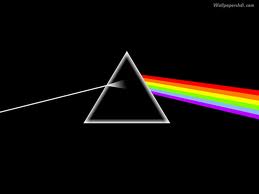
EVERY classic rock fan would have his or her own Pink Floyd story. This is mine. As the rock world celebrates the 40th anniversary of the landmark album ‘The Dark Side of the Moon’ this week, I thought I’d pen down a few memories of growing up on the band, and also mention my extremely brief encounter with its singer-bassist Roger Waters over a decade ago.

Undoubtedly, Floyd is one of my favourite acts ever, across genres. But curiously, the first time I heard the group, I hated them. I wondered how on earth they could have such a large following, when their music seemed so complex. The ringing of alarm clocks and jingling of coins weren’t my cup of music.

It must have been 1979 or 1980, and at 16 or 17, I was still to be bitten by the rock bug. Growing up in Delhi, the major source of music was radio – shows like ‘A Date With You’, ‘Forces Request’ and ‘In The Groove’. Those days, my personal taste largely revolved around ABBA, Boney M, Bee Gees, Brotherhood of Man, Donna Summer, a few evergreens, a bit of country, lots of disco. Get the hint?

I liked some of the Beatles love songs, but rock was yet to enter my life. The stations regularly played Pink Floyd’s ‘Time’ or ‘Money’, Uriah Heep’s ‘July Morning’ or Deep Purple’s ‘Smoke On The Water’, and I would lower the volume. What kind of people could possibly appreciate them?

By 1981, as I entered college, the rock phase began, first with the Doors, then with Traffic and majorly with Jethro Tull. In a year or so, I had got into Bob Dylan, Santana, the Moody Blues, Eric Clapton, Led Zeppelin and even Deep Purple, but still found Floyd and Uriah Heep too highbrow. The only Floyd song I liked was ‘Another Brick in the Wall Part 2’, though I didn’t care to listen to the rest of ‘The Wall’, which was a rage at that point. Today, ‘Another Brick In The Wall Part 2’ is probably the only Floyd song I stay away from!

I had my own personal tape recorder then, and the drawing room had a record player. I bought a few vinyls, but most of my collection was on cassette, which I used to get recorded from a place called Pyramid in Palika Bazaar. Since Tull was my favourite at that time, I had a large collection of theirs, which I kept bragging about.

My college friend Rahul Dutt wondered why I was so fond of Tull. We had a lot of common tastes in both rock and ghazals, the Indian soft music form which had become a craze, but he wouldn’t appreciate Tull. And his favourite band was Floyd, against whom I still had a bias. The only thing we argued about was ‘Tull Vs Floyd’.

When Rahul went on a holiday to Calcutta, he asked for some music. I happily gave him some Tull. He said he would take it on the condition that I would accept some Floyd tapes he would lend me. We agreed, and he gave me ‘Dark Side’ and ‘Obscured by Clouds’.

When Rahul returned, the first thing he exclaimed was: “Tull is too good. What a band. Ian Anderson is a star.” And my response was: “Pink Floyd is the ultimate. Wonder why I took so long to appreciate them.”

THAT was just the beginning of my Floyd era. I found their sound not only distinct, but also very deep and, of course, psychedelic. It took me to another zone, another planet, another mindspace.

The next step was to get deeper and deeper into their music. To begin with, I bought the ‘Dark Side’ LP and played it daily, at least a couple of times. Though each individual song was a masterpiece, it was one album I had to play from start to finish. I just couldn’t start with ‘Time’ or ‘Money’ and go to some other song. It had to be the complete thing. Forty-two minutes, fifty-nine seconds.

By end-1984, I moved to Jaipur to work for ‘The Times of India’. I carried my Lucky Goldstar double deck two-in-one, but didn’t have a turntable there. So I got a few cassettes of Floyd recorded.

Each C-90 cassette would have two albums. One had ‘Dark Side’ on one side and ‘Obscured by Clouds’ on the other. Another contained ‘Wish You Were Here’ and ‘Animals’. The third had ‘Atom Heart Mother’ and ‘Meddle’. And yes, there was one which had ‘The Wall’. At that time, I didn’t have the first two albums, or ‘The Final Cut’.

Coupled with a lot of Tull, the Moody Blues, Dylan and some jazz, Floyd would be a daily necessity. The ‘Wish You Were Here-Animals’ tape was played the most often, followed by the ‘Echoes’ part of ‘Meddle’. There were many favourite songs by now — ‘Mother’, ‘Dogs’, ‘Sheep’, ‘Shine On You Crazy Diamond’, ‘Echoes’, ‘Have a Cigar’, ‘If’. ‘Wish You Were Here’, ‘Goodbye Blue Sky’, ‘Comfortably Numb’, ‘Free Four’, to name some. As for ‘Dark Side’, there was no favourite song. Each one was equal.

In the absence of much reference material and also because I didn’t own the LPs, my knowledge of the band was limited to knowing the names of the musicians and the songs. Roger Waters had left the group by then, and there was talk of guitarist David Gilmour, keyboardist Richard Wright and drummer Nick Mason working on new material under the Floyd name.

But when I went to Delhi on a holiday, I met friends who possessed the LPs, and had huge discussions on Floyd. We talked of Waters’ role as a songwriter, and how the songs he wrote alone had their own stamp, compared to those written with Gilmour or with all the others. We talked of Gilmour’s guitar style, and also the influence founder-member Syd Barrett had on the band, now that I had heard the first album ‘Pipers At The Gates of Dawn’ extensively. I also learnt about saxophonist Dick Parry, singer Clare Torry and engineer Alan Parsons, who created some great music on his own too.

The Floyd phase lasted a few years. I made up for whatever I hadn’t heard — ‘A Saucerful of Secrets’, ‘More’, ‘Ummagumma’, ‘The Final Cut’ and even Barrett’s solo work released in the late 1960s. Soon, I was tripping on ‘A Momentary Lapse of Reason’, even though Waters was absent. ‘Learning To Fly’, ‘On The Turning Away’ and ‘One Slip’ became my new favourites.

Some rock concerts were available on VHS, and the Floyd favourite was ‘Live at Pompeii’. For a brief while, I got into Waters’ solo outings, like ‘The Pros and Cons of Hitch-Hiking’, ‘Amused To Death’ and ‘Radio KAOS’, though I never enjoyed them as much as Floyd.

But slowly, I moved onto various other bands and kinds of music. The frequency of listening to Floyd reduced considerably, and very often, was restricted to party sessions with friends. There was a brief ‘Division Bell’ phase, and though I liked the songs ‘Coming Back to Life’ and ‘High Hopes’ it was never among my favourite albums.

Around the late 1990s or so, the Floyd albums became available in CD form. One by one, I began picking them up, and though one always favoured the analog sound of the vinyls, the digital CDs had their own effect too. Moreover, music always seemed more personal if you had the record sleeve which you could read from.

Soon, I picked up DVDs, favourites being ‘Pulse’, ‘The Wall’ and ‘David Gilmour in Concert’. I started reading about the band — first Nicholas Schaffner’s ‘Saucerful of Secrets: The Pink Floyd Odyssey’ and many years later Mark Blake’s ‘Comfortably Numb: The Inside Story of Pink Floyd.’

Though I didn’t listen to Floyd as frequently as before, I started trying to gather as much information as I could. The Internet helped too, and one read some interesting trivia, like jazz guitarist Lee Ritenour playing an uncredited role in ‘The Wall’ album, and the child’s voice on ‘Goodbye Blue Sky’ belonging to Waters’s son Harry.  And the more I read and learnt about Floyd, the more fascinated I was.

IN APRIL 2002, Roger Waters was scheduled to play in Bangalore. I was to cover the concert for Mid Day, and found myself in a train compartment filled with Floyd fans.

I was keen on interviewing Waters, but I was told he hated the Press. These days, he goes about giving press conferences, but during that tour, there was no question of one. And the entire media fraternity wanted a one-on-one interview.

The organisers DNA Networks ensured that they could catch him for five minutes at the airport. The exercise was mainly to ensure that the media got enough photographs.  There was a barricade between the media and the Waters team, and only a few DNA staffers and sponsors could stand near Waters.

As I knew Venkat Vardhan of DNA well, he arranged for a DNA shirt of my size, so I could get close to Waters. The condition was that I wouldn’t ask any questions which would make them suspicious. I just listened for those few minutes, but I did manage to get his autograph on my rock encyclopaedia and on a cover of his album ‘In The Flesh’.

Waters was in his element when the media rattled off their questions. One journalist asked: “How contextual is your music?” Looking totally zapped, even insulted, he snapped back: “That question is totally out of context.”

“What is it like being away from David Gilmour and the others, and touring on your own?” asked another. The answer: “I wouldn’t tell you even if you were to write my authorised biography.”

“How does it feel to be on your first visit to India?” The quip: “As I don’t want to get into trouble, you can conveniently say that I am feeling thrilled.”

Somebody asked him to sign a ‘Division Bell’ CD, probably not knowing that Waters wasn’t part of that album. He just turned back, and walked towards his car. End of media session, thank you!

Waters and his troupe stayed at the Windsor Manor. The following day, some band members were giving interviews, and I got to speak to guitarist Snowy White, singer PP Arnold and Waters’ son Harry, who’s a keyboardist. I wanted to meet guitarist Andy Fairweather-Low but he was out shopping.

That evening’s concert was simply memorable. As the Sunday paper’s deadline was early, I was actually SMSing and calling my colleague Kimi Dangor in Mumbai, who compiled it to produce an excellent piece.

Nearly five years later, in February 2007, Waters played in Mumbai. The highlight of this show was that they played the entire ‘Dark Side’ album at a stretch. It was an out-of-the-world experience. After listening to the album hundreds of times, it was a completely different trip to see it live.

Undoubtedly, ‘Dark Side’ remains a milestone in the history of rock. Its 40th anniversary definitely calls for a grand celebration.


shiv

Pandit Shivkumar Sharma (above)

IN September 2012, I had begun a monthly series on Indian musical instruments. The aim was two-fold: one, to make Indian readers aware of certain artistes they might not have heard before, and secondly, to expose relatively new audiences, mainly from the West, to the melodic or rhythmic beauty that various Indian instruments offer.

In this series, I shall not go into too many technicalities and playing styles. I shall focus on how the instrument is used in different genres, and mention the leading performers in each style. However, while I have tried to name all the main musicians, the lists mentioned are by no means exhaustive or complete. In all parts of the series, I shall use a similar format to maintain uniformity, and some portions on the concert structure may be repeated verbatim if needed.

The earlier parts of the series talked about the violin, sitar, bansuri, sarangi, different types of veena and the sarod. This month, we feature the santoor.

santoor

EVERYONE immediately identifies the santoor with Pandit Shivkumar Sharma. From the ’60s, he has ruled the stage with hundreds of live concerts and released numerous albums, making him the undisputed monarch of the instrument.

Sharma, in fact, is singularly credited with the adaptation and popularisation of the santoor in Hindustani classical music. Earlier, it was played primarily in lighter forms of music, but under the guidance of his father and guru Pandit Uma Dutt Sharma, he began playing classical compositions.

Compared to the sitar, sarod and bansuri (bamboo flute), the santoor has relatively fewer practitioners. Yet, it remains hugely popular among classical music fans, mainly because of the serene and captivating music it produces. It has a distinct look too, trapezoid in shape, and is played by striking it with a pair of mallets.

Here, we shall look at the instrument’s origins, how it is played, major players and its use in other kinds of music.

Origins: An ancestral archetype of the santoor was believed to have been invented in Mesopotamia before 900 BC, and much later used in different forms in Iraq and India.

In ancient Sanskrit texts, the santoor has been called the ‘shata-tantri veena’ or hundred-stringed instrument. In India, it was primarily played in Kashmiri music and Sufiana music as an accompanying instrument.

With Sharma’s efforts, it achieved the status of a solo instrument in Hindustani classical music, and is now recognised internationally. The santoor is considered to be part of the dulcimer family, other similar instruments including the hammered dulcimer (as known in the UK, US and Canada), hackbrett (played in mainland Europe) and cimbalom (played in eastern Europe and Russia).Japan, Korea and China have their own types of dulcimers.

How the santoor is played: In any concert, the musician sits with the instrument on his lap. The broader side is placed close to the musician, and he strikes the strings with a pair of mallets or hammers.

Different strings produce different sounds and a typical santoor has two sets of bridges, with a three-octave range. Tuning is done through pegs located on the musician’s right.

The santoor is primarily played by a solo artiste, with accompaniment from the tabla and from the stringed drone instrument tanpura. At times, it is also used as a duet (called jugalbandi) with other instruments, mainly the bansuri. The jugalbandis between Sharma and flautist Pandit Hariprasad Chaurasia are legendary.

A concert usually begins with the rendition of a classical raga, the melodic mode used in Indian music. The first piece comprises a three-part movement beginning with the slow alaap, increasing tempo with the jod and reaching an energetic climax with the jhala. Here, there is no tabla accompaniment.

After the alaap-jod-jhala sequence, the instrumentalist plays two or three compositions in the same raga, with tabla accompaniment. These are known as gats or bandishes, and while the santoor player demonstrates his skill here, the tabla player also gets certain portions to play brisk passages, much to the audience’s delight.

Once this first raga is over, the santoor player may play another raga, or may play certain light ragas, folk tunes or devotional pieces, depending on the time allotted. Most santoor players are known to play a light piece in raga Pahadi towards the end of the concert.

Major players: For his part, Sharma has groomed many talented santoor players like R Visweswaran, Satish Vyas, Nandkishore Muley, Dhananjay Daithankar and of course his son Rahul Sharma.

The other well-known santoor players include the senior Kashmir artiste Bhajan Sopori, the innovative Ulhas Bapat, Tarun Bhattacharya, who has studied under sitar maestro Pandit Ravi Shankar, and Snehal Muzoomdar, who is known for his jugalbandis with veena player Narayan Mani. Among the youngsters, Sopori’s son Abhay is also making a mark.

Use in other music: Besides classical concerts, Sharma also teamed up with Chaurasia to produce film music under the name Shiv-Hari. He has thus used the santoor in films like ‘Silsila’, ‘Chandni’, ‘Lamhe’ and ‘Darr’, besides playing the instrument in older film songs.

By and large, Sharma has stayed away from fusion. The only known experiment in this genre was the piece ‘Shringar’ with the group Remember Shakti at a live concert in Mumbai. But his concept album ‘The Call of the Valley’, with Chaurasia and guitarist Brij Bhushan Kabra, has been a best-seller in Hindustani classical music.

Rahul Sharma has been taking the santoor to newer areas, especially through his collaborations with international artistes like pianist Richard Clayderman (on the albums ‘The Confluence’ and ‘The Confluence II’), saxophonist Kenny G (on ‘Namaste India’), world music group Deep Forest (on ‘Deep India’) and Egyptian oud player Georges Kazazian (on ‘A Meeting By The Nile’).

Rahul has also released experimental albums like ‘Time Traveller’, which has a new age element, and ‘The Rebel’, which blends classical music with soft-rock and is being promoted as santoor-rock.

These albums have found a willing audience among younger listeners. They would act as a perfect initiation for those who haven’t heard much of the instrument. But to gain a deeper understanding of the santoor, it is essential to begin with any Shivkumar Sharma  classical recording, ideally with Ustad Zakir Hussain on the tabla. The santoor simply enchants you with its sheer melody.


specialjolly2

A MAJORITY of those reading the headline would instantly react: What rubbish! After all, from the beginning, songs have been an integral part of Hindi cinema. So what provokes such a ridiculous thought?

Well, this blogger recently saw Neeraj Pandey’s ‘Special 26’ and Subhash Kapoor’s ‘Jolly LLB’. Both movies are pretty enjoyable. The former is a suspense-filled heist drama, and the latter a satire on the legal system, complete with dramatic courtroom sequences. They have been well-received by both the critics and the public, and are definitely different from the run-of-the-mill movies one often endures.

However, both have two weaknesses. They have half-baked love angles which just don’t go with the main storylines. And they have a few unwanted songs, which simply mar their flow, almost like speed-breakers on a smooth highway. ‘Special 26’ even has a sizzling background score, but the songs by Himesh Reshammiya and MM Kreem fall totally flat. In ‘Jolly LLB’, music director Krsna’s songs just come and go unnoticed.

Such an observation has led to the question raised above. Must each and every film compulsorily have songs, whether or not they fit? In exceptional cases, why can’t filmmakers alter the rules if it’s for their own good?

Over the years, there have been very few movies without songs. The older lot includes J B H Wadia’s ‘Naujawan’ and B R Chopra’s ‘Kanoon’. Singeetham Srinivasan Rao’s ‘Pushpak’ (which was a silent film anyway) and Ramgopal Varma’s ‘Kaun’ didn’t have songs. Neither did Neeraj  Pandey’s successful debut ‘A Wednesday!. And the last one makes us think: if his debut film was successful without songs, why did he have to include them in his follow-up ‘Special 26’, when there was really no need?

There were also films which had only one representational song, or one tune with the end credits. In 1964, Sunil Dutt’s ‘Yaadein’ had Vasant Desai’s ‘Dekha hai sapna koi’. Earlier, films like ‘Ek Doctor Ki Maut’ and ‘Ek Ruka Hua Faisla’ avoided songs.

Examples of the past decade include Sanjay Leela Bhansali’s ‘Black’ (Monty Sharma’s ‘Haan maine chookar dekha hai’) and Nishikanth Kamath’s ‘Mumbai Meri Jaan’ (which didn’t have any new song but used the old ‘CID’ classic ‘Yeh hai Bambai meri jaan’ at the end), Ramgopal Varma’s ‘Bhoot’ had a nine-track audio CD, but in the film, only Sunidhi Chauhan’s ‘Ghor andhere’ was used during the end credits.

What’s obvious is that all these films had narratives that didn’t necessarily require any song and dance. But then, such examples are few and far between. By and large, the idea of producing a Hindi film without songs or with only one song just doesn’t exist.

Even if one suggests that so-and-so film shouldn’t have songs, it’s unlikely that filmmakers will really obey. To begin with, there is a mindset that Hindi films must have songs. But in today’s scenario, there are other reasons why producers and directors will not do away with them.

A film’s music is always a source of revenue for the producer. By selling audio rights to the music label, he makes up for some of the money spent in creating the film, including costs incurred on producing songs.

Secondly, music is also used as a marketing tool. The audio CD is normally released a few months before the film, often at a party where the stars get media publicity. Snippets of the film’s songs are used as promos in various television channels. It’s a good way of creating awareness about the film without revealing too many details.

Thirdly, a few good songs can always keep a bad film alive. Even if the film flops, there might be additional people wanting to watch it just for the songs, or as is more likely these days, see their favourite stars dance to those songs.

The musician fraternity will naturally oppose the idea of having films without songs. And the stars need songs even after the film’s release, so that they can perform them at awards ceremonies or live shows. Keeping all this in mind, why would anybody in his right mind want to release films without songs?

Obviously, a whopping majority will not even think of doing such a thing. And one is not even suggesting that such a trend occur.

What we’re trying to say is that if the film’s subject is strong enough and any intrusion will affect the flow, songs may be unnecessary. This may be more applicable to films with loads of suspense, ones with a superfast pace or to a section of horror movies.

Even if one insists on using songs for any of the reasons mentioned above, one should use them intelligently, so that they blend with the script, instead of affecting the smoothness of the plot. It might even help using them in the background smartly. Or if one wants to release many songs, follow the ‘Bhoot’ example — record them and put them on a CD, but don’t include them in the film.

The truth, of course, is that many filmmakers feel songless films aren’t a safe option. Whether that is because of creative or commercial reasons, one doesn’t know. As such, only a handful of them have actually gone ahead and released such films.

That brings us back to ‘Special 26’ and ‘Jolly LLB’. However wonderful and enjoyable the films are overall, they’d probably have been better without the songs. We’re sure there are quite a few films in the pipeline, with offbeat subjects, and which don’t really need songs. That’s something that needs a bit of thought.


jason

THOUGH his name seemed vaguely familiar, I had never heard the music of Jason Molina, till I read the news of his recent death in the Guardian website. Today, I am totally hooked to his songs, wondering how I missed out on someone who’s easily one of the best songwriters of the past two decades.

Jason died on March 16 at the young age of 39, following organ failure caused by excessive consumption of alcohol. He recorded songs under his own name, or under the group names Songs: Ohia or Magnolia Electric Co, where he invited different guest artistes.

Honestly, I might not have read the Guardian article seriously, but a couple of lines instantly grabbed my attention, as writer Everett True described Jason as “a singer-songwriter of singular grace” and that “everything he created had a beautiful handmade feel.”

Naturally, such free-flowing accolades aren’t meant to be taken lightly. I keep reading more about Jason, and soon heard his song ‘The Dark Don’t Hide It’, which instantly hit me with its jangling alternative rock electric guitars, a country pedal steel guitar in the backdrop, and the lines:

Something held me down and made me make a promise
That I wouldn’t tell when the truth forgets about us
But saying it now comes easily
After finding out how you’ve been using me
At least the dark don’t hide it¸ At least the dark don’t hide it

Hugely impressed, I heard his other songs, first on YouTube, and then on http://live.magnoliaelectricco.com which is streaming his entire catalogue for a limited period. There were many gems – ‘Almost Was Good Enough’, ‘Long Desert Train’, ‘Let Me Go, Let Me Go, Let Me Go’, ‘The Harvest Law’, ‘Didn’t It Rain’, ‘Northstar Blues’, ‘Ring The Bell’, ‘Farewell Transmission’, ‘Song For The Road’, ‘Such Pretty Eyes For A Snake’ and the strangely-titled ‘Honey, Watch Your Ass’. And there are numerous songs I am yet to hear.

It’s just the third day since I’ve immersed myself in Jason’s music, but a few thoughts come to mind. To begin with, how does one describe his sound? He’s been categorised as alternative folk-rock or indie-rock, but that’s because of the obvious blend of alternative rock and country/ folk that one finds in many tunes, with a good mix of electric and acoustic.

Lyrically, many songs may remind you of Leonard Cohen, moreso because they are melancholic and dark, and yet leave you with a sense of hope, and in some cases, even a smile. Influences of Bob Dylan and Tim Buckley also seem evident in the words, and the overall sound would make you think of Tim Hardin, Nick Drake or Jeff Buckley, and at times even Neil Young.

Whatever, there’s a certain uniqueness in Jason’s music that makes it so effective, so endearing, so ethereal. At the same time, he was really prolific, releasing 19 albums, six EPs and man singles since 1996, including an album in collaboration with Will Johnson. Some of his albums, like “What Comes After The Blues’, ‘Magnolia Electric Co’, ‘The Lioness’, ‘Axcess & Ace’, ‘Didn’t It Rain’ and ‘Autumn Bird Songs’, are filled with songs that can only be termed as outstanding.

Still, in the larger scheme of things, Jason Molina never got the recognition he deserved. The masses barely knew about him. Part of the reason may be that he was never on any of the major record companies. His indie label Secretly Canadian has obviously done a lot not only to promote his music, but also to raise funds for his treatment. Yet, his audience seems limited to a select group, who all swear by his music, at least going by some of the tributes one has read in blogs and on YouTube.

Jason had been in terrible health for the past few years, doing his round of rehabs. Yet, he kept writing music till the very end. His chronic alcoholism was well-known. And though one can’t say it for sure, one would assume that his personal condition and mental framework were reflected very clearly in the songs he wrote.

It’s strange, of course, that one gets to hear a genius like him only after his death. A similar thing happened with singer-songwriter Terry Callier (see earlier blog). A great singer every which way, he wasn’t too well-known among the masses, but after he passed away in October 2012, his songs suddenly hit the airwaves. Personally, I had heard a few Callier songs before, but actually discovered his music only after he died.

Jason had a huge amount of talent, which needs to be showcased and spread to the serious listener at this stage. To people who follow words and meaning, to those who want their music to have depth and substance.

A good way to start is with the song ‘Long Desert Train’. Just a gentle acoustic guitar and a heavenly voice. One may simply search the song on YouTube, but it would also be ideal to check out its words, which I am reproducing below in its entirety.

This is Jason Molina at his best. And this is only one of them. What imagination, really. Hopefully, more and more people will discover this magician.

Long Desert Train/ Jason Molina, from the album ‘Pyramid Electric Co’

You used to love a lot of things
You used to love talking
This you never told me about

If it’s what your eyes were saying
I already figured it out

I could just tell it was bad
I couldn’t tell how bad
You never took off your shades
And you stayed like that for days

I guess your pain never weakened
Your cool blood started burning
Scorching most of us in the flames

But there are things you can’t change
There are things you can’t change

You called that the curse of a human’s life
That you couldn’t change

Said you’d never be old enough
Or young enough
Tall enough
Thin enough
Smart enough
Brave enough
Rich enough
Pretty enough
Strong enough
Good enough
Well you were to us

You wanted silence by itself
Just the word
You wanted peace by itself
Just to learn

There were things you couldn’t change
You got the dull pounding rain
You got the last car in the long desert train
You almost made it
You almost made it again


vayu

Vayuputras/ Various artistes

Genre: Devotional/ fusion

Times Music/ Rs 295

Rating: ****

AMONG the contemporary Indian writers, Amish Tripathi has proved to be hugely popular with his Shiva trilogy. The first two books ‘The Immortals of Meluha’ and ‘The Secret of the Nagas’ were really well-written, and commercially successful too.

The author has just come out with the concluding part ‘The Oath of The Vayuputras’, and on the eve of its release, he launched an 11-track CD called ‘Vayuputras’. Produced by seasoned music industry professional Raajeev Sharma, the album features a host of artistes, including classical duo Pandits Rajan and Sajan Mishra, singers Sonu Nigam and Euphoria’s Palash Sen, percussionist Taufiq Qureshi, tabla exponent Bickram Ghosh and multi-instrumentalist Raghav Sachar, besides some lesser-known but really talented names.

The music is primarily devotional in nature, filled with shlokas and chants of ‘Har Har Mahadev’, but with a contemporary feel and fusion flavour. Despite a considerable amount of programming, the songs use a lot of traditional instruments, including the bansuri, sitar, sarod, ektara, tabla and even the characteristic mridangam on a composition depicting the dance of the Nataraj. However, one wishes the rudra veena, said to be the instrument dear to Lord Shiva, was used somewhere.

Many people would be familiar with the song ‘Jo Vayuputra Ho’, composed by Taufiq Qureshi with vocals by Sonu Nigam, as it features in the promotions. The 10th song on the album, it has modern orchestrations including electric guitars and keyboards, and uses the lines: “Shapath se na apath ho woh jo Vayuputra ho.”

However, before that comes on, there’s plenty of melody magic. The opening number, ‘The Shiva Trilogy Theme: Neelkanth’, has been composed by Taufiq, who also plays percussion. A highlight is the wonderful flute-playing of Varad Kathapurkar. With its ambient mood and catchy arrangements, it sets the perfect tone.

The next four songs are inspired by situations taking place in the ‘Meluha’ book. ‘She Enters His Life’, which talks of Sati entering the life of Shiva, has been composed by Aditya Jain and Durgesh Khot. It begins with the shlokaBrahmanandamparama sukhadam kevalam jnanamurtim”, and is followed by melodic taraana-styled vocals by Saurabh Shetye and Supriya Ramalingam.

‘Nataraj: The Lord of Dance’ has been composed by Bickram Ghosh, and boasts of vibrant shloka chants and classical vocal elements, and energetic instrumental rendition, with sarod, sitar, tabla and mridangam. Taufiq’s ‘Har Har Mahadev’ is a speech before a war, with Amish himself reciting the English words. ‘Bhadra Bam Bole’, composed by Arijit Datta and featuring robust vocals by Prasant A Samadhar, is based on many incidents in which Shiva smokes the chillum.

‘Jawab Do Prabhu’, performed by the group Aghor along with vocalist Jataveda Banerjee, represents the ‘Nagas’ book. Orchestrated with a bhajan feel and charming flute passages, it evokes a sense of sadness and emotion with lines like: “Tum the meri duniya, mere ishwar, mere vidhaata, phir bhi tum mujhe chhod gaye, yaad kiya,maine yaad kiya” and “Hey Prabhu, kaise paaoon tohra pyaar, jawaab do, jawaab do, Ishwar mere, jawaab do.” Super number this.

The next piece ‘Kashi to Panchvati’ is composed and performed by Sunny Thadani and Charan Singh Pathania, with vocals by Saurabh Shetye. A Yanniesque new age-meets-electronica feel, sweeping orchestrations and powerful drums make this an absolute winner, and the ‘Satyam Sundaram’ recitations at the end leave you with a high.

Two tracks are inspired by the concluding ‘Vayuputras’ book. Raghav Sachar’s ‘Shiva Sanware’ has a Rahman-like flavour, pleasant arrangements, lyrics by Rohit Sharma and sweet-sounding vocals by Paroma Dasgupta. ‘Badri Re, Prabhu Ram’, composed by Tatva Kundalini, features Palash Sen of the band Euphoria. With its balance of Hindi and English lyrics and even its compositional style, it is reminiscent of the Colonial Cousins sound.

The album concludes with ‘Om Namah Shivay’, which contains recitation of chants by Pandits Rajan and Sajan Mishra. With its shankh opening, strong tanpuras and bansuri interludes, the piece induces a feeling of peace and calmness.

Though the CD has essentially been released to market the Shiva trilogy, it stands out on its own, with some fantastic compositions, and ability to relate to the themes used in the books. While we strongly recommend you read the books too, the CD is a must for music buffs whether they have a habit of reading or not.

RATING SCALE: * Poor; ** Average; *** Good; **** Excellent; ***** Simply outstanding


afro

(Above): Afro Celt Sound System

In November 2012, we started a series called ‘Take Five’, which would recommend five albums or artistes from various genres of international music. This series will be carried once in two months. The first two parts talked of British alternative rock and classical crossover, respectively. This month, we look at five essential albums in world music.

ali2

(Above) Toumani Diabate (left) and Ali Farka Toure

THE term ‘world music’ is rather vague. It has no standard definition, and yet, there are a few loose theories about what it means. To add to the confusion, we have terms like world fusion, global fusion, ethnic fusion and worldbeat, which mean pretty much the same.

For the Americans, world music includes any music created outside the US, outside the western classical sphere and outside any English language music produced in countries other than the US (read: England, Australia, New Zealand). Thus, for someone in that continent, Indian music is also part of world music.

Here in India, Indian music is anything but world music. Indians believe world music is music produced in any part of the world, except the English-speaking countries (the US, the UK, Australia and New Zealand), except for very clearly-defined genres like jazz, the blues or electronic dance music, and except for music produced by neighbouring countries like Pakistan and Sri Lanka.

Whatever the definition, ‘world music’ quite simply exposes listeners from one part of the world to music from other regions. And for someone in India, it would include music from Africa, Latin America, Europe minus its western classical element, the Middle East and the Far East.

The popularity of world music has increased over the past decade or so. Rock musician Peter Gabriel has played a major role by organising the World of Music Arts & Dance (Womad) festival and also starting the label Real World Records to promote music from different geographical regions. Other labels like ECM and Nonesuch Records have done their bit too, while the Grammy awards have a category for best world music album.

In the late 90s, the release of ‘Buena Vista Social Club’, an album and film featuring Cuban musician Juan de Marcos Gonsalez and American guitarist Ry Cooder, and featuring old-timers like Compay Segundo, Ruben Gonzales and Ibrahim Ferrer, led to the revival of Cuban and Latin American music.

Those who haven’t really followed the genre may wonder where to begin, as both record stores and YouTube are flooded with such albums and videos. Keeping this in mind, we suggest essential five albums that can be used as an introduction to this genre. Since we are keeping Indian audiences primarily in mind, we shall not talk of Indian music, even though an Argentinian or Albanian reading this blog may believe Indian music is world music.

This, of course, is a very basic introduction, which omits music from certain specific and important parts of the world. It’s ideal enough for beginners, though.

Mongo Santamaria – Sabroso (Cuba): Cuban conga player and composer Santamaria is best-known for composing the jazz standard ‘Afro Blue’ in the late 50s. In the 1960 album ‘Sabroso’, he focused on traditional Cuban music played by a charanga (ensemble) that included violinists, a flautist, trumpeter, tenor saxophonist, pianist, bassist and timbale player, besides vocalists.

The album contains 13 songs, filled with energy and rustic melody. In fact, the songs revolve on dance forms like the mambo and pachanga, thus making them vibrant. The stand-out cuts are ‘Pachanga pa ti’, ‘Mambo de cuco’, the catchy ‘El bote’ and the live version of ‘Para ti’.

This is traditional Latin American music at its best.

Hevia – Tierra de Nadie (Spain): Jose Angel Hevia Velesco, popularly known as Hevia, is a Spanish player of the bagpipes. He also invented the midi electronic bagpipes, which he often plays live. Hevia specialises in music from the Asturian region of Spain.

Released in 1998, ‘Tierra de Nadie’ is Hevia’s debut album. It instantly got noticed because of its opening track ‘Busindre Reel’, a foot-tapping tune that became quite a rage. Other songs like ‘Llaciana’, ‘Gaviotes’ and ‘La Linea Trazada’ brim with infectious melody.

Though his later albums did not match it both in terms of quality and success, ‘Tierra’ should definitely be checked out.

Mickey Hart – Planet Drum (various): Best known as drummer of rock band Grateful Dead, Mickey Hart diversified into global percussion with the 1991 album ‘Planet Drum’. It won the first Grammy for best world music album.

As the title suggests, ‘Planet Drum’ featured percussionists from all over the world. Besides Hart, an American, it had tabla player Zakir Hussain and ghatam (a type of pot) exponent Vikku Vinayakram from India, talking drum player Sikiru Adepoju and Babatunde Olatunji from Nigeria, conga player Giovanni Hidalgo and Frank Colon from Puerto Rico , and drummer Airto Moreira from Brazil. Airto’s wife Flora Purim provided vocal support.

The album, which has 13 tracks, set the trend for similar percussion-based albums featuring rhythmic styles from various regions. In terms of sound, it’s a masterpiece.

Ali Farka Toure and Toumani Diabate – In The Heart of the Moon (Mali): The West African country of Mali has produced some amazing musicians, including singer Salif Keita, guitarist Ali Farka Toure and his son Vieux, and brothers Sidiki and Toumani Diabate, who play the kora, a 21-stringed bridge harp.

In this classic album, Ali Farka Toure and Toumani collaborate to produce 12 tracks based mostly on Songhai traditions of the north Mali and the Bambara traditions of southern Mali and neighbouring Guinea. Released in 2005, it was recorded without rehearsals, and also features a guest appearance by the renowned Ry Cooder on three tracks.

Toure, who passed away in 2006, was known to blend traditional Malian music with the blues, and this album provides a fantastic exposure to the music of West Africa. After Toure’s death, the album ‘Ali and Toumani’ was released in 2010.

Afro-Celt Sound System – Further In Time (Various): As the name suggests, Afro-Celt Sound System blends African and Celtic music, but to make it trendier, it adds modern electronic dance sounds like trip-hop and techno, resulting in a heady cocktail.

The 2001 release ‘Further in Time’ is the group’s third album, after ‘Sound Magic’ and ‘Release’, which featured the famous ‘Eireann’. The group uses African instruments like the kora harp, talking drums and djembe (a percussion instrument), Celtic instruments like the Uilleann pipes and Indian instruments like tabla and dhol drum, beside guitars, mandolins, pianos, keyboards, flutes and drums.

The 12-track set has guest appearances by Peter Gabriel on ‘When You’re Falling’ and Led Zeppelin’s Robert Plant on ‘Life Begin Again’. The band later renamed itself to Afrocelts, and though it’s cut down on releases of late, remains one of the pioneers of world music.

While these five albums can provide a good beginning to world music, there’s obviously much, much more to choose from. Fifty years after her death, French singer Edith Piaf is still a rage across Europe, and is now bracketed in the world music category. Angelique Kidjo of Benin, Africa, is one of the frontrunners of this genre. Her performance in Mumbai two years ago was memorable.

Others you may try include Umm Kulthumm of Egypt, Youssou N’Dour from Senegal, Ofra Haza from Israel, Ladysmith Black Mambazzo from South Africa, Varttina from Finland, Aomusic from the US, Japan’s Kazue Sawae on the stringed instrument koto and Sevara Nazarkhan from Uzbekhistan. Besides these, there are flamenco guitarists Paco de Lucia, Paco Pena, Jesse Cook, Ottmar Leibert and the duo of Jorge Strunz and Ardeshir Farah.

The list is endless, but once you get into some of them, you’ll automatically discover more. World music is an ocean which just keeps growing larger.

Design a site like this with WordPress.com
Get started